The 61 Best Business Strategy Books
Are you looking to sharpen your business acumen and develop stronger strategic thinking? On this page, you'll find reviews of the best books on business strategy that have transformed how successful leaders approach challenges and opportunities.
Browse through carefully selected works from thought leaders like Jim Collins, Clayton Christensen, and Peter Thiel. From building visionary companies and disruptive innovation to lean startups and effective management – these business strategy books offer invaluable insights for entrepreneurs, executives, and anyone passionate about business growth.
Whether you're launching a startup, scaling an existing business, or seeking to understand market dynamics better – you'll discover practical frameworks and proven methods that can be applied immediately to your unique situation.
(Disclosure: We love sharing our favorite books with you! As an Amazon Associate, we earn a small commission from purchases you make through our links, which helps us continue creating content you enjoy.)

Blue Ocean Strategy, Expanded Edition: How to Create Uncontested Market Space and Make the Competition Irrelevant
INSEAD professors W. Chan Kim and Renée Mauborgne present their groundbreaking Blue Ocean Strategy, showing how companies can escape competitive "Red Oceans" and create uncontested markets. The book offers eight key principles for strategy development and execution, packed with practical tools like the Strategy Canvas. Dense but valuable content recommended for entrepreneurs and managers seeking strategic innovation.

Great by Choice: Uncertainty, Chaos and Luck – Why Some Thrive Despite Them All
Jim Collins and Morten Hansen's research reveals what sets exceptional companies apart during turbulent times. Surprisingly, the companies that outperformed their industry by at least tenfold weren't more adaptive or risk-taking – they excelled through fanatical discipline, empirical decision-making, and productive paranoia. This compelling, research-based book offers actionable insights for entrepreneurs navigating uncertainty.

Good to Great: Why Some Companies Make the Leap … and Others Don't
Jim Collins' 'Good to Great' reveals how average companies transform into extraordinary ones through a culture of discipline. Based on research of eleven companies, Collins identifies key factors: level five leaders characterized by humility and determination, putting the right people in place first, confronting reality while maintaining optimism, and focusing passionately on what they can excel at. The transformation isn't sudden but builds momentum like a flywheel until becoming unstoppable.

Built to Last: Successful Habits of Visionary Companies
Collins and Porras reveal what separates enduringly successful companies from their competitors. Their research shows these visionary organizations maintain a core ideology of authentic values and purpose, while constantly driving progress through ambitious 'BHAGs' – bold goals that inspire employees. The book offers entertaining, illustrative examples of lasting success principles applicable to both professional and personal life.

No Rules Rules: Netflix and the Culture of Reinvention
In 'No Rules Rules,' Netflix CEO Reed Hastings and Erin Meyer reveal the innovative corporate culture behind Netflix's global success. The book details three pillars: recruiting only top talent with premium compensation, fostering radical transparency with regular feedback, and replacing control with context-based leadership. This approach prioritizes innovation over error prevention, creating remarkable flexibility. Written in an engaging, well-structured style, it's essential reading for entrepreneurs and aspiring business leaders.

Innovator's Dilemma: When New Technologies Cause Great Firms to Fail (Management of Innovation and Change)
Christensen's "Innovator's Dilemma" explains why established companies often fail when disruptive technologies emerge. Large firms focus on evolving existing products for current customers, ignoring initially inferior innovations that serve niche markets. Meanwhile, startups seize these opportunities and eventually disrupt incumbents. The solution? Creating separate entities to develop disruptive products. This excellently organized book remains relevant after two decades and is essential reading for entrepreneurs.

The Pumpkin Plan: A Simple Strategy to Grow a Remarkable Business in Any Field
In 'The Pumpkin Plan,' Mike Michalowicz transfers pumpkin farming principles to business success. The book offers a systematic approach to build a thriving company without burnout, focusing on finding the right business model, promoting strengths, nurturing top customers, collaborating with suppliers, and eliminating high-maintenance clients. Written in accessible, humorous language, it provides practical guidance for small business owners.

Choose: The Single Most Important Decision Before Starting Your Business
"Choose" by Ryan Levesque guides entrepreneurs through selecting the right market before implementing the customer-focused methods from his previous book "Ask." Through a detailed, research-backed process of brainstorming and selection, Levesque helps minimize business failure risk using objective criteria and checklists. The book balances technical guidance with motivational writing and inspiring success stories, making it valuable for anyone aiming to maximize their entrepreneurial success through smart market selection.

Beyond Entrepreneurship 2.0: Turning Your Business into an Enduring Great Company
In 'Beyond Entrepreneurship 2.0', Jim Collins and William Lazier blend timeless concepts with fresh insights from Collins' decades of research. The book offers a comprehensive framework for building great companies through vision, strategy, leadership, and disciplined execution. You'll find both research-backed theory and practical tools in this well-structured, engaging read – highly recommended for entrepreneurs and leaders seeking long-term business success.

Competing Against Luck: The Story of Innovation and Customer Choice
This book explores the 'jobs to be done' theory of innovation, explaining that customers don't simply buy products but hire them for specific tasks. By understanding what job your product does for customers, entrepreneurs can create innovations that people will pay premium prices for. The theory is explained through numerous engaging examples, making this an entertaining and valuable read for anyone interested in systematic innovation.

Start with Why: How Great Leaders Inspire Everyone to Take Action
In this inspiring book, Simon Sinek explores why certain individuals and companies achieve extraordinary success. He reveals how Apple, Martin Luther King Jr., and the Wright brothers all shared one approach: they started with 'Why'. By placing purpose before action, they distinguished themselves from competitors. This insightful examination prompted the reviewer to discover their own personal 'Why', ultimately inspiring them to launch their blog.

Retention Point: The Single Biggest Secret to Membership and Subscription Growth for Associations, SAAS, Publishers, Digital Access, Subscription … Membership and Subscription-Based Businesses
Robert Skrob's "Retention Point" shifts focus from customer acquisition to retention, showing how to reach the critical moment when prospects become loyal members. The book emphasizes emotional engagement over features, introduces the "Member On Ramp" onboarding concept, and provides practical examples across industries. A valuable guide for anyone running membership or subscription businesses.

10x Is Easier Than 2x: How World-Class Entrepreneurs Achieve More by Doing Less
In '10x Is Easier Than 2x,' Dan Sullivan and Dr. Benjamin Hardy present a counterintuitive approach to achievement: aiming for 10x results often requires less effort than doubling your output. Why? Because 10x goals force you to think differently, focusing exclusively on your unique abilities while eliminating the non-essential. Recommended for entrepreneurs and anyone wanting to escape the 'work more to achieve more' trap.

Company of One: Why Staying Small is the Next Big Thing for Business
In 'Company of One,' Paul Jarvis challenges the growth-at-all-costs mindset, showing how small businesses can be more efficient, flexible, and profitable. The book presents a refreshing approach to entrepreneurship focused on intentional decisions, customer-centricity, and personal freedom. Through real-world examples, Jarvis demonstrates how you can build a business that supports the life you actually want—independent and self-directed.

$100M Offers: How To Make Offers So Good People Feel Stupid Saying No
In "$100M Offers," Alex Hormozi reveals his remarkably successful marketing method that has generated $36 for every dollar invested in advertising. The book provides step-by-step instructions for creating irresistible "Grand Slam Offers" based on his value equation with four key components. Extremely practical and easy to understand, it comes with a free video series and is highly recommended for entrepreneurs and freelancers looking to boost their success.

80/20 Sales and Marketing: The Definitive Guide to Working Less and Making More
Perry Marshall demonstrates how applying the 80/20 principle to sales and marketing can dramatically increase effectiveness. By focusing on the vital 20% (or even 4%) of customers who generate most revenue, you can multiply your success exponentially. The book provides practical guidance on identifying these high-value customers, with online tools supporting implementation. Written in accessible chapters with helpful summaries, it's valuable for marketers at all experience levels.

Zero to One: Notes on Startups, or How to Build the Future
In 'Zero to One,' PayPal founder Peter Thiel outlines seven criteria for startup success, emphasizing revolutionary technological advancement and monopoly positions through innovation. Thiel argues that real success comes from creating something entirely new rather than incrementally improving existing technology. This concise, accessible book combines real-world examples with Thiel's personal Silicon Valley experience, making it essential reading for founders and investors alike.

The Lean Startup: How Today's Entrepreneurs Use Continuous Innovation to Create Radically Successful Businesses
"The Lean Startup" by Eric Ries offers a refreshing management approach for creating successful products under uncertainty. Unlike traditional methods that spend months on development before market testing, Lean Startup advocates launching rudimentary prototypes (MVPs) early to gather customer feedback and iterate quickly. This practical guide is particularly valuable as the author draws from his own experiences, making the Build-Measure-Learn cycle both compelling and actionable.

Built to Sell: Creating a Business That Can Thrive Without You
Built to Sell uses the engaging story of agency owner Alex to teach entrepreneurs how to create founder-independent businesses. Through a fictional narrative with practical lessons, John Warrillow covers specialization, process documentation, recurring revenue, and systematic sales strategies. While not entirely realistic, it provides a clear framework for building a sellable business that offers entrepreneurial freedom.

The 80/20 Principle: Achieve More with Less
In 'The 80/20 Principle,' Robert Koch applies Pareto's observation that 80% of results come from 20% of effort to all areas of life. By recognizing this principle, we can focus on what truly matters – whether in business, career choices, or personal happiness. The book offers valuable guidance on achieving more with less effort, making it a highly recommended read for anyone seeking success and fulfillment.

The E-Myth Revisited: Why Most Small Businesses Don't Work and What to Do About It
The E-Myth Revisited explains why 90% of small businesses fail: technical expertise doesn't guarantee business success. Gerber reveals that a thriving company needs not just a technician, but also an entrepreneur and manager. The founder must work ON the business, not just IN it, developing systems that allow for delegation. With practical examples and an engaging narrative, this essential read offers valuable insights for aspiring and struggling entrepreneurs.

If You're Not First, You're Last: Sales Strategies to Dominate Your Market and Beat Your Competition
In this energetic, no-nonsense sales guide, Grant Cardone offers practical strategies to dominate markets even during economic downturns. You'll discover actionable tactics for boosting visibility, creating urgency, adopting a winning mindset, and proactively acquiring customers. While his direct, aggressive approach isn't for everyone, the book delivers valuable insights for sales professionals, entrepreneurs, and anyone looking to stand out in competitive markets.

Toilet Paper Entrepreneur: The tell-it-like-it-is guide to cleaning up in business, even if you are at the end of your roll
Mike Michalowicz's unconventional guide uses toilet paper as a metaphor for business resources – the less you have, the more creative you must be. This experienced founder offers practical advice on aligning business values, maintaining focus, and taking strategic action. Written with profane language and potty humor rather than academic theory, this inspiring book is recommended for aspiring or current entrepreneurs.
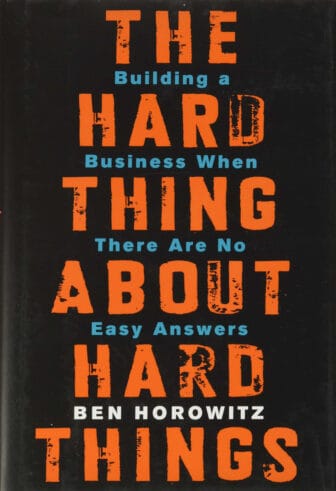
The Hard Thing About Hard Things: Building a Business When There Are No Easy Answers
Ben Horowitz's book combines an engaging autobiography of his journey from Netscape to founding a prestigious VC firm with practical management advice for navigating business challenges. The first part offers an entertaining look at Silicon Valley during the DotCom crash, while the second provides pragmatic leadership strategies particularly relevant for larger companies. Throughout, readers receive hard-earned wisdom from real-world management situations rather than dry theory.

DotCom Secrets: The Underground Playbook for Growing Your Company Online
Despite Russell Brunson's polarizing style, his book delivers valuable online marketing expertise drawn from building his multi-million dollar empire. He clearly explains key concepts like the 'value ladder,' 'sales funnel,' and traffic temperature, providing actionable instructions even beginners can implement. This practical playbook is essential reading for anyone serious about marketing their online business or blog effectively.

The Phoenix Project: A Novel About IT, DevOps, and Helping Your Business Win
This review explores 'The Phoenix Project,' an engaging novel about IT transformation. Follow Bill, the newly appointed IT head, as he tackles familiar challenges: missed deadlines, problematic deployments, and interdepartmental blame. With just 90 days to save his department from outsourcing, Bill must transform a traditional IT operation into an agile DevOps team – a journey that offers valuable insights for modern businesses.

Never Enough: From Barista to Billionaire
Andrew Wilkinson's 'Never Enough' chronicles his rise from minimum-wage barista to tech billionaire, but focuses more on the insights gained than success stories. He shares concepts like lazy leadership and anti-goals, while honestly confronting the emptiness that can accompany financial success. This thoughtful, self-critical book offers valuable perspective for entrepreneurs and anyone looking beyond material success.

Nail It then Scale It: The Entrepreneur's Guide to Creating and Managing Breakthrough Innovation
The authors of 'Nail It Then Scale It' present a systematic method for entrepreneurial success based on years of research. They reveal that entrepreneurs fail not because they can't build products, but because they build unwanted ones. The book outlines a scientific approach: identify monetizable pain points, verify customer needs, and develop solutions collaboratively through prototypes and feedback – increasing success probability while minimizing risks.

Who Not How: The Formula to Achieve Bigger Goals Through Accelerating Teamwork
In "Who Not How", Sullivan and Hardy demonstrate how shifting from "How can I do this?" to "Who can solve this for me?" helps achieve bigger goals faster. The book advocates for smart delegation and focusing on strengths rather than self-optimization. With real-world examples and practical strategies, it offers a valuable mindset shift for entrepreneurs, leaders, and anyone feeling overwhelmed by their to-do list.

Accelerate: The Science of Lean Software and DevOps: Building and Scaling High Performing Technology Organizations
This book presents empirical evidence that agile practices significantly improve IT team performance, based on a three-year DevOps Survey conducted by the authors. Though well-structured but somewhat dry, the book focuses on scientific validation rather than describing the methods themselves. It's particularly valuable for skeptical IT managers and programmers seeking data-backed arguments for agile transformation.

Escaping the Build Trap: How Effective Product Management Creates Real Value
In "Escaping The Build Trap," Melissa Perri offers strategies for companies to avoid focusing merely on feature output and instead develop products that deliver real customer value. The book presents practical approaches like user testing, data analysis, and continuous improvement, while introducing concepts such as lean product management and agile development. With engaging case studies and applicable tips, it's essential reading for anyone committed to customer-oriented product development.

High Output Management
In "High Output Management," former Intel CEO Andy Grove offers practical strategies for managers to improve their teams' performance. The book covers essential management aspects including production planning, decision-making, communication, employee development, and conducting effective meetings. Despite being written 40 years ago, its principles remain highly relevant today, having shaped modern management practices like OKRs and one-on-ones. A must-read for current and aspiring managers.

Ask: The Counterintuitive Online Method to Discover Exactly What Your Customers Want to Buy…Create a Mass of Raving Fans…and Take Any Business to the Next Level
Ryan Levesque's 'Ask' method offers a counterintuitive approach to understanding customer needs through specific surveys that segment potential buyers and identify their challenges. Having generated over $100 million in sales, this method works for businesses of all sizes. While the author's self-promotional style and video sales pages might not appeal to everyone, the book provides a comprehensive, detailed explanation that readers can implement independently.

The Ten-Day MBA: A Step-by-Step Guide to Mastering the Skills Taught In America's Top Business Schools
"The Ten-Day MBA" by Steven A. Silbiger offers a concise guide to essential business knowledge taught at America's top business schools. In ten chapters, the MBA graduate clearly explains fundamental concepts from marketing to strategy, helping you understand business jargon and financial statements. While not replacing a full MBA program, this book equips you with key terminology to confidently join professional discussions.

The Everything Store: Jeff Bezos and the Age of Amazon
Brad Stone's biography chronicles Jeff Bezos's journey from founding Amazon in a garage to building a global powerhouse. It details Amazon's innovations like AWS and Kindle, its revolutionary logistics systems, and Bezos's unwavering commitment to customer service and long-term vision over short-term profits. The book offers an exciting portrayal of how Amazon transformed existing business models to become the true "Everything Store."

How Will You Measure Your Life?
Clayton M. Christensen, Harvard professor and bestselling author, offers personal guidelines for finding professional fulfillment, building meaningful relationships, and living with integrity. His advice includes focusing on motivational factors rather than hygiene factors in your career, consciously developing strategies, deepening family relationships, and teaching children to solve problems themselves. With engaging anecdotes and business parallels, this inspiring book provides valuable life guidance.

Lean Customer Development: Building Products Your Customers Will Buy
Cindy Alvarez's 'Lean Customer Development' shows you how to identify genuine customer needs before building products. As a companion to Lean Startup that focuses on the pre-MVP phase, this practical guide teaches effective interviewing techniques, problem-focused research, and systematic feedback collection. Whether you're a founder, product manager, or developer, this accessible, hands-on book provides invaluable templates and step-by-step guidance you can apply immediately.

Delivering Happiness: A Path to Profits, Passion, and Purpose
In this compelling autobiography, Tony Hsieh shares his journey from early startups to building Zappos, demonstrating how company culture serves as a strategic foundation for success. You'll discover how passion, purpose, and business can be effectively combined. Written in an engaging, personal style, this book offers valuable insights for entrepreneurs, leaders, and anyone seeking more than just a job.

Creativity, Inc.: Overcoming the Unseen Forces That Stand in the Way of True Inspiration
Ed Catmull's 'Creativity, Inc.' offers a fascinating journey from his early days in computer graphics to building Pixar with Steve Jobs. The book reveals how Pixar fosters creativity through trust, risk-taking, and adaptability. You'll discover valuable management insights from one of the most innovative companies and see Steve Jobs in a refreshingly different light.

The Power of Moments: Why Certain Experiences Have Extraordinary Impact
In 'The Power of Moments,' bestselling authors Chip and Dan Heath explore why certain experiences stay with us forever. They identify four key elements – elevation, insight, pride, and connection – that create extraordinary moments. Through engaging examples, they demonstrate how anyone can intentionally craft memorable experiences in professional and personal settings, without requiring significant resources. The book offers practical, applicable ideas rather than dry theory.

Contagious: Why Things Catch On
Jonah Berger's "Contagious" reveals why some ideas go viral while others don't through six key principles called "STEPPS." The Wharton professor combines scientific research with entertaining examples to explain viral marketing. You'll find practical tips whether you're running a startup, creating content, or simply curious about viral phenomena. A valuable read that balances expertise with accessibility.

Scrum: The Art of Doing Twice the Work in Half the Time
In 'Scrum: The Art of Doing Twice the Work in Half the Time,' creator Jeff Sutherland explores the history, philosophy, and versatile applications of Scrum beyond software development. The book offers entertaining case studies and emphasizes how team satisfaction impacts productivity. Despite the author's tendency toward self-aggrandizement, it's recommended for readers interested in understanding the 'why' behind Scrum, not just the 'how'.

Antifragile: Things That Gain from Disorder
In "Antifragile," Nassim Nicholas Taleb introduces a fascinating concept: systems that don't just survive stress and uncertainty, but actually grow stronger from it. You'll discover how embracing randomness and disorder can be advantageous across biology, economics, and personal life. Despite some repetitive passages, this accessible book offers valuable insights for anyone seeking to understand risk, chaos, and resilience in our unpredictable world.

Originals: How Non-Conformists Move the World
In 'Originals,' Adam Grant explores how non-conformists drive innovation and change. You'll discover strategies for developing ideas, minimizing risks, convincing others, and fostering creativity in yourself and organizations. Grant demonstrates why procrastination can fuel innovation and how successful companies embrace dissent through engaging studies and examples. This inspiring book is essential for anyone looking to transform ideas into meaningful impact.

Noise: A Flaw in Human Judgment
In "Noise: A Flaw in Human Judgment," Kahneman, Sibony, and Sunstein examine how people make different decisions given identical information – a widespread phenomenon affecting fields from jurisprudence to medicine. The authors explore noise's origins, types, consequences, and ways to minimize its impact on decision-making. This insightful book offers valuable knowledge for anyone seeking to understand and improve their everyday and professional choices.

Expert Secrets: The Underground Playbook for Converting Your Online Visitors into Lifelong Customers
This book guides you in positioning yourself as an expert, marketing your knowledge effectively, and using storytelling to build a loyal customer base. It offers practical step-by-step instructions, including how to conduct the 'perfect webinar.' Written in an accessible style with numerous examples, it's a valuable resource for anyone looking to establish themselves as a personal brand in their field.

Hooked: How to Build Habit-Forming Products
Nir Eyal's 'Hooked' presents the four-phase Hook Model for creating habit-forming products: trigger, action, variable reward, and investment. The book offers numerous examples from social media to Bible apps, with helpful summaries and practical checklists. Though ethical considerations are addressed somewhat superficially, it's a valuable resource for entrepreneurs, product managers, and designers seeking to create products that users integrate into daily life.

Priceless: The Myth of Fair Value (and How to Take Advantage of It)
This book challenges traditional economic theory by revealing how psychological biases, not rational thinking, influence our pricing decisions. Through a collection of academic studies and entertaining anecdotes, Poundstone explores phenomena like 'anchoring' that affect what we're willing to pay. These insights are valuable both for those setting prices and for consumers hoping to recognize the psychological tricks shaping their purchasing decisions.

Irresistible: The Rise of Addictive Technology and the Business of Keeping Us Hooked
In "Irresistible," Adam Alter reveals how tech companies deliberately design addictive products that dominate our lives. About half of Westerners have developed behavioral addictions to technology, impacting mental health and relationships. The book explores how these addictions form and offers practical solutions to regain control while maintaining technology's benefits – an enlightening read for anyone concerned about tech's influence.

The Unicorn Project: A Novel about Developers, Digital Disruption, and Thriving in the Age of Data
"The Unicorn Project" follows programmer Maxine as she navigates common development challenges after being transferred to the Phoenix project. She encounters a secret group called the "Rebellion" promoting modern software principles. Like its predecessor, the book entertainingly demonstrates what's possible when traditional companies embrace digital transformation. It's an accessible read that reunites readers with familiar characters while telling the story from a developer's perspective.

Steve Jobs: The Exclusive Biography
Walter Isaacson's biography traces Steve Jobs' remarkable journey from Apple's garage beginnings through his exile, ventures with NEXT and Pixar, to his triumphant return that transformed Apple into a global powerhouse. The book portrays Jobs as a visionary perfectionist – both brilliant and ruthless – with an extraordinary sense for design and usability. Even readers without Apple affinity will find this compelling portrait more thrilling than many novels.

Traffic Secrets: The Underground Playbook for Filling Your Websites and Funnels with Your Dream Customers
In 'Traffic Secrets,' the final book of Russell Brunson's trilogy, you'll discover how to attract your ideal customers to your business. While the first two books explained marketing fundamentals and positioning yourself as an expert, this volume shows you where to find potential customers and how to capture their attention. With practical step-by-step instructions, it's a valuable resource for anyone who enjoyed the previous books.

The Tipping Point: How Little Things Can Make a Big Difference
Gladwell's 'The Tipping Point' explores why certain ideas and trends become wildly successful by examining the critical moment when behaviors reach a tipping point. The book attributes this phenomenon to well-connected individuals, compelling messages, and perfect timing. While the review notes some arguments lack scientific rigor, particularly regarding crime rates, it still recommends this interesting and entertaining read.

Elon Musk: How the Billionaire CEO of SpaceX and Tesla is Shaping our Future
This biography portrays Elon Musk's remarkable journey from South African immigrant to visionary entrepreneur. The book chronicles his founding of groundbreaking companies like PayPal, SpaceX, and Tesla, showcasing his revolutionary contributions to online payments, space travel, and electric vehicles. While highlighting Musk's extraordinary determination and risk-taking, Vance also addresses his controversial personality traits.

The Millionaire Fastlane: Crack the Code to Wealth and Live Rich for a Lifetime
In "The Millionaire Fastlane," entrepreneur MJ DeMarco challenges traditional wealth-building strategies, arguing that saving and conventional investing won't make you rich. He presents three financial paths, advocating for the "fastlane" approach of entrepreneurship, creating scalable systems independent of your time, and generating value. This direct, motivating book is essential for anyone seeking an alternative to the traditional 9-to-5 career path.

Profit First: Transform Your Business from a Cash-Eating Monster to a Money-Making Machine
Profit First offers entrepreneurs a practical system to transform financially struggling businesses into profitable ones. By distributing income into four separate accounts and limiting spending to what's available in the operating expenses account, business owners can prioritize profit rather than forgetting it. Despite some repetition, the book delivers its message through entertaining anecdotes and practical step-by-step instructions, making it valuable for entrepreneurs who typically base decisions on their bank balance.

The Effective Executive: The Definitive Guide to Getting the Right Things Done
In this classic, Peter Drucker explains how to become an effective manager through self-management principles that are valuable for everyone, not just executives. The book offers practical steps to enhance productivity: track your time usage (you'll be shocked by wasted time), focus only on essential activities, and create daily uninterrupted time blocks for concentrated work. Despite being over 50 years old, its insights remain remarkably relevant.

Building A Story Brand: Clarify Your Message So Customers Will Listen
This book offers entrepreneurs and freelancers the StoryBrand framework to communicate their product benefits clearly and convincingly. By positioning yourself as the guide who helps customers (the heroes) succeed, you create a compelling narrative that resonates. Well-structured and practical with useful examples, this book is highly recommended for anyone who needs to articulate their business value effectively.

Range: How Generalists Triumph in a Specialized World
David Epstein's 'Range' challenges the belief that early specialization is key to success. Through studies of top performers across disciplines, he reveals that generalists with diverse experiences often excel by approaching problems from multiple perspectives. This accessible, engaging book demonstrates how taking detours and exploring various interests can lead to greater creativity and innovation – reassuring news for career-changers and parents of undecided children.

Find Your Why: A Practical Guide for Discovering Purpose for You and Your Team
This workbook guides you step-by-step to discovering your personal or company 'Why' based on Sinek's earlier work. While I had independently developed some of the recommended techniques, the book helped me structure my search more effectively. Though I couldn't distill my 'Why' into a single sentence, the process still led to a successful conclusion through several focused statements.

Essentialism: The Disciplined Pursuit of Less
This book teaches how to achieve our goals by distinguishing between essential and non-essential tasks. Rather than spreading ourselves thin, we should focus our energy on activities that bring us closest to our dreams. The author provides practical tips for saying 'no' and prioritizing effectively. While not offering groundbreaking insights, this entertaining read encourages readers to reclaim control of their lives.
Leave a Reply